Register
to get articles and more to your inbox
News & insights
Archive
Directory
Hyundai Shows (VERY) Dark Side At Winter Olympics Activation
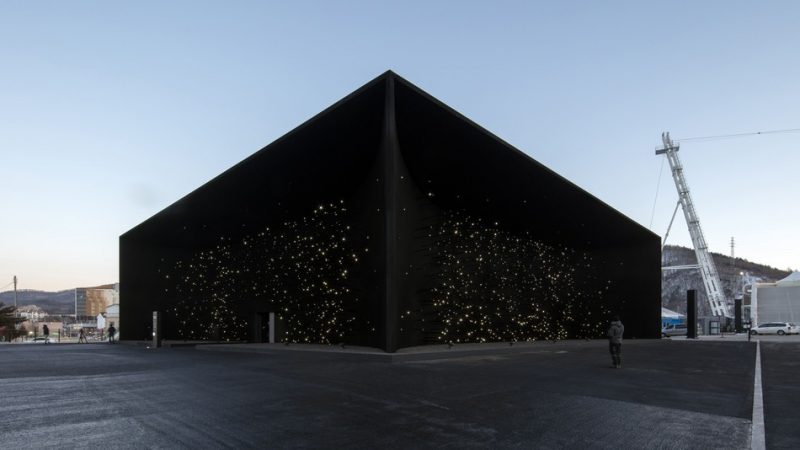
In a bid to change its prosaic brand image, Hyundai Motors is pulling Olympic visitors from the drab Olympic stadium next door into a black hole to reveal a brighter future. It was designed by leading architect Asif Khan, who had previously collaborated with Coca-Cola on a stunning Beatbox-themed pavilion for London 2012 Olympics.
The Hyundai-backed structure’s exterior has been coated with Vantablack VBx 2, the world darkest pigment, and adorned with thousands of LED lights on multi-length rods, accentuating the impression of a starlit night sky.
However, once visitors enter the building—a stark contrast greets them—a pristine white room with a chamber encapsulating an enormous marble water maze contains hundreds of little channels sliding 25,000 water droplets each minute toward a pool at the bottom.
So what is Hyundai trying to tell punters with this stunt? According to Wonhong Cho, Hyundai executive vice-president and chief marketing officer, “Normally a commercial brand builds a pavilion to exhibit their own products and services. But this time we don’t display any cars, we just want visitors to touch and feel what Hyundai’s brand represents and also what Hyundai wants to talk about.”
What Hyundai actually wants to talk about is the future of mobility and sustainability as it showcases the brand’s fuel cell technology, though this could be lost on random visitors who opt out of the guided tours.
The pavilion’s space-inspired exterior symbolises the origins of hydrogen, the most abundant element in the universe, while the interior water room with droplets reflects the seeds of hydrogen on earth.
Each drop of water running through the channels is meant to represent Hyundai’s upcoming Nexo hydrogen fuel cell electric car zipping down highways toward a sustainable future. The message is that each car contributes to a much greater collective good, represented by the lake of water at the bottom. Visitors may place their hands over air holes to release more droplets to symbolise how each person has a hand in improving sustainability.
“People coming to a motor show know about the fuel cell electric vehicles, but Olympic visitors really feel estranged from this technology, so we tried to create a story using friendly metaphors like universe and water rather than focus on our product,” added Heekyung Kwon, creative strategy team manager at Hyundai’s Creative Works group.
At the end of the day, while not all visitors will care about the science behind the hydrogen fuel production, it still effectively sells Hyundai’s brand vision to be idealistic, cutting-edge technologists with a green heart.
While Hyundai declined to revealed figures, it’s obvious the 2018 PyeongChang pavilion and month-long related activations would have had a princely budget behind it.
The brand has even admitted not making the additional investment to measure ROI as it’s confident the value from this partnership would be immense… this has partly been achieved by the scant presence of Japanese rival Toyota, an official worldwide Olympic sponsor, in South Korea for the winter games. Both Hyundai and Kia have also independently supported Korea’s bobsleigh team, speed skaters and other winter athletes.